The public record already stretches across decades.
Even this first pass shows early visionary work, Southwest place imagery, restoration-era material, and late design studies.
Art timeline
It gathers dated public traces into a readable chronology. It is not a final catalogue raisonne. It is a clear timeline of what can already be verified through preserved titles, posts, and restoration-era records.
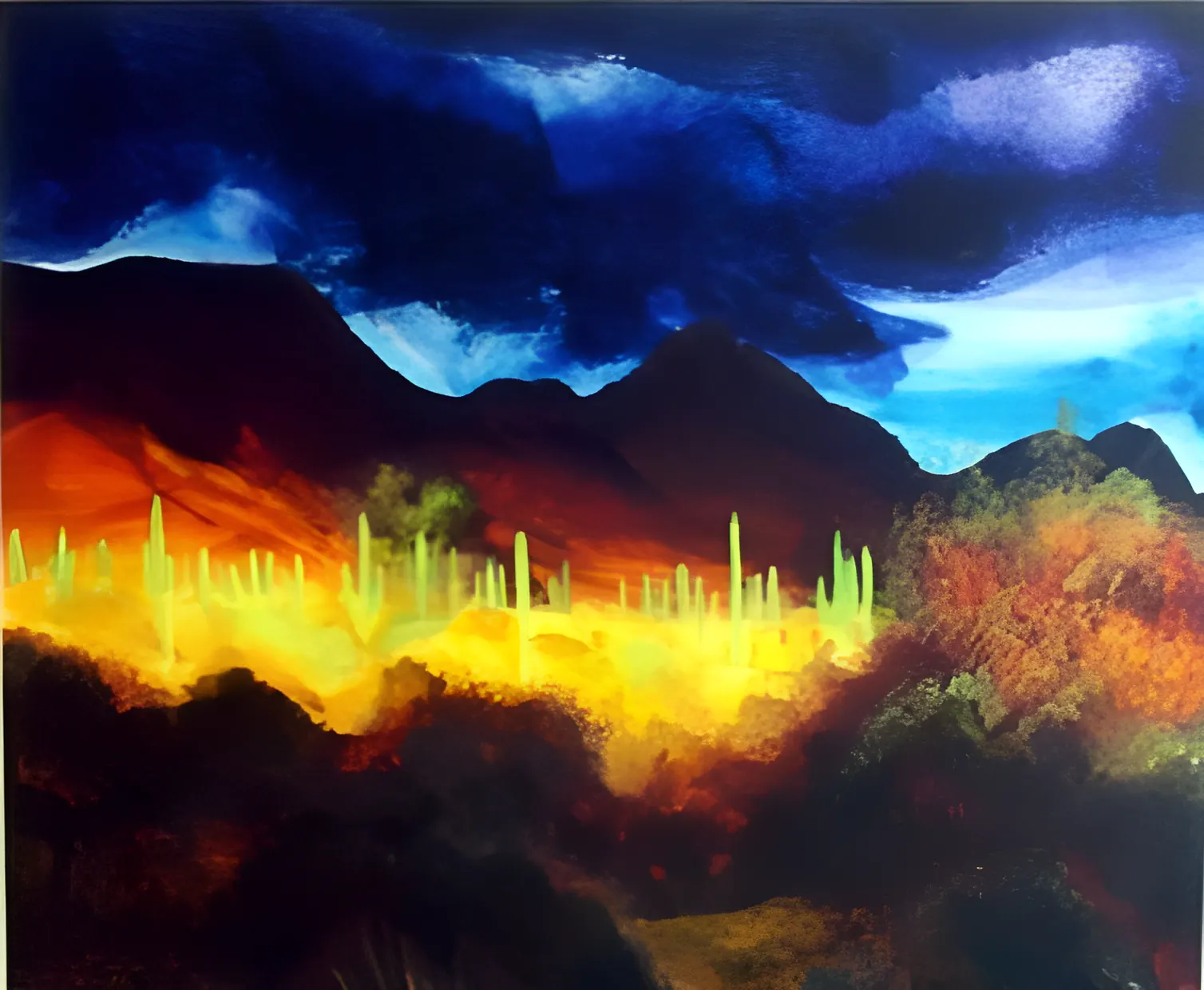
Chronology overview
The timeline helps visitors see when titles, places, materials, and preservation efforts appear in the public record. It gives the wider tribute a chronological backbone.
Even this first pass shows early visionary work, Southwest place imagery, restoration-era material, and late design studies.
CalleValentinus, T.S. Steve Minton, LDS Archaeology, and related trails keep the timeline from feeling invented.
The later web-archive period matters because it is how much of this work stays visible at all.
Timeline notes
Strong public anchors
The March 2018 CalleValentinus posts are especially important because they preserve clusters of titled works with dates and media notes in one place.
The 2008 T.S. Steve Minton archive adds public third-party presentation of the work, including the preserved Phoenix Bird reference and historical Tucson / MJA Studio traces.
The LDS Archaeology and Plates of Gold blogs strengthen the 1986–1995 restoration and reconstruction thread.
Chronology
Each block gathers the clearest year markers currently visible in the archive trail.
Madonna in Red (1966 & 1973), Subconscious City (1971), Space Dream (1971), Monument Valley Dream (1971), Milcah above 4 Peaks (1972), and Blue Thunderbird Over Mt. Graham (1973) mark an early cluster of visionary, symbolic, and place-centered work.
Public source grouping: CalleValentinus, March 6, 2018.
Designs for Tucson’s Gentle Ben’s (1975), Nolo Mi Tangere / Resurrection Scene (1977), Orion Astronomer (1980), Above 4 Peaks (1981), Four Peaks Mountain (1982), Horses of the Revelation (1982), Taos Profile on Redwood (1982), and Phoenix Bird (1982) show a dense period of place, symbol, and mythic image-making.
Public source grouping: CalleValentinus, March 6–7, 2018, plus the Phoenix Bird trace on T.S. Steve Minton, July 26, 2008. Use Tucson & MJA Studio for the outside Tucson-era web corroboration.
Izapa Stela 5 (MJA Studio 1986), the Jaguar Mural Teotihuacan (MJA / MJA Studio 1986), later-preserved Nimrud restoration work, and the Monument Valley Arizona collages (MJA Studio 1995) show that the public archive does not separate research from making. Restoration, comparison, and re-presentation were part of the work itself.
Public source grouping: LDS Archaeology, Plates of Gold, and CalleValentinus. Use Izapa restoration and Archaeology & Restoration for the stronger source note trail.
Mt. Lemmon Fire at North Sarnoff (1999), St. George in an Eagle Helmet (2002), Study for St. George (2002), The Zoo Painting with Aunt Cathie (2003), The Tula Taxi (2003), Dreaming Sung by Al Perry (2004), CD cover design – Harpist (2005), and Gorilla Close-Up from the Zoo painting (2005) point to a late sequence of narrative, portrait, study, and design work.
Public source grouping: CalleValentinus, March 7 & 13, 2018.
The work’s later public life matters too. The 2008 T.S. Steve Minton posts preserve public third-party presentation of the art and historical Tucson/MJA Studio references. The Blogger profile shows a blog network active since December 2008, while CalleValentinus and related blogs continue the preservation effort into 2018.
Public source grouping: Blogger profile, T.S. Steve Minton archive, Jan Brueghel Limoux, and 2018 blog activity. Use Tucson & MJA Studio and Jan Brueghel Limoux for the project-level archive view.
The chronology can grow further with more direct post-level links, exhibition or publication mentions, and newer pages such as Mt. Baldy, Tucson / MJA Studio, and Jan Brueghel Limoux.
Timeline plus visual path
That makes the visual archive easier to navigate when someone knows the period of the work but not the exact title.
Best use cases
Those branches cross medium and year, so a simple date list is not always enough on its own.
Named work clusters
These clusters help visitors move from year markers into the more specific work names the archive already supports in public.
Monument Valley Dream, Milcah above 4 Peaks, Blue Thunderbird Over Mt. Graham, and Designs for Tucson’s Gentle Ben’s help turn early date markers into recognizable named works.
Nolo Mi Tangere / Resurrection Scene, Orion Astronomer, Above 4 Peaks, Horses of the Revelation, and Phoenix Bird anchor the symbolic and visionary branch of the timeline.
Izapa Stela 5, Jaguar Mural Teotihuacan, Nimrud-related restoration work, and Monument Valley Arizona collages help visitors follow the later public record into reconstruction and studio-era threads.
Next archive path
The timeline helps orient the visitor. The catalog and places pages make it easier to keep following the threads.
Caption-backed timeline notes
This keeps era browsing useful when a visitor needs a short, source-grounded note instead of a broad decade summary.
Use short notes such as Monument Valley Dream (1971 acrylic) or Blue Thunderbird Over Mt. Graham (1973 acrylic) when the title and place are already enough to identify the work.
Use Designs for Tucson’s Gentle Ben’s for the public-design branch and Nolo Mi Tangere / Resurrection Scene for the sacred-image branch when you need a concise caption-ready entry point.
Phoenix Bird, Izapa Stela 5, and the Monument Valley Arizona collages now have clearer catalog anchors when the date line, studio marker, or outside web trace is the main thing you want to preserve.